
In the interest of transparency, we earn a commission on some purchases made through links on this site. As an Amazon Associate I earn from qualifying purchases.
PicassoTiles 100 Piece Magnetic Tiles are the best STEM toy for most 2 year olds, because they turn pure play into early lessons in shapes, balance, and cause and effect without a single instruction sheet. Still, the right pick depends on your little scientist. Some toddlers want to stack, some want to squish, and some just want to flip every latch they can find.
We put hands on all seven of our picks with toddler-sized hands and toddler-sized attention spans in mind. Here’s the quick lay of the land. The Yoto Mini 4th Gen Portable Kids Audio Player is our best screen-free listening pick. Busy Board for Toddlers wins for fine motor practice and pretend play. Fat Brain Dimpl Pops is the one for tiny fingers that love to poke and pop. Magnetic Blocks make a friendly starter set for stacking and sorting. Looking ahead, UNGLINGA 150 Experiments Science Kits is the pick to grow into, and Learning Resources Botley 2.0 The Coding Robot Activity Set offers a first taste of coding.
Why STEM at age 2? Science, technology, engineering, and math sound big, but at this age they look like stacking, matching, and wondering what happens next. Every toy below is chosen with age fit and safe, hands-on play in mind.
Ready to find your toddler’s perfect match? Scroll on, and try a little experiment of your own: watch which toy your child reaches for first. It tells you a lot!
Our Top Picks at a Glance: Which STEM Toy Fits Your Two-Year-Old?
Short on time? Here’s the quick list, one fun line per toy. A few of these are really best saved for slightly older kids, or for playing right alongside a grown-up, and I’ve said so where it matters.
- PicassoTiles 100 Piece Magnetic Tiles: best for building. Stack, snap, and knock down, then do it again.
- Fat Brain Dimpl Pops: best for sensory play. Squishy pops that tiny fingers can’t resist.
- Busy Board for Toddlers: best for pretend play and fine motor skills. Latches, switches, and gadgets to explore.
- Magnetic Blocks: best for stacking and sorting. A simple way to play with colors and patterns.
- 200PCS Magnetic Building Blocks Set: best for big building ideas. Plenty of pieces for towers, shapes, and wobbly creations.
- Learning Resources Botley 2.0 The Coding Robot Activity Set: best for a first taste of early coding. Grown-ups will do most of the programming for now.
- Yoto Mini 4th Gen Portable Kids Audio Player: best for screen-free listening. Stories and sounds without a glowing screen.
- UNGLINGA 150 Experiments Science Kits: best for experiments. A pick to grow into, with a grown-up running every fizz and mix.
Now, a little honesty. Two-year-olds are big on curiosity and small on patience, so some of these toys work better as “play together” picks. The science kit and the coding robot are the clearest examples. Your toddler will mostly watch, press, and giggle while you do the tricky parts, and that still counts as real learning.
Before you buy, check the age label on each listing. Some of the building and listening picks are labeled for ages 3 and up, so close supervision is a must with magnets and small parts. Pick the toy that matches your little one’s favorite kind of play, and you can’t go far wrong.
How We Picked: Our Toddler-Tested Testing Checklist
Why Trust Us
We’re BlackDog, and kid-focused learning is what we do all day. Our corner of the internet is full of writing games, coding tools, and math activities for curious young minds, so we look at toys the same way. Does it spark curiosity? Is it right for this age? Those two questions guide every pick here.
We’re upfront about the limits, too. Ratings and availability come from public product listings, and listings change, so a toy that’s in stock today might be sold out tomorrow. We also point out when a toy is labeled for older kids so you can plan for grown-up help.
STEM Skills for 2-Year-Olds: What Learning Looks Like at This Age
Two-year-olds don’t know they’re doing STEM, and that’s the beauty of it. They’re just poking, stacking, and pressing things to see what happens. That curious little wiggle is exactly how early learning begins.
Here’s what each letter looks like at this age:
- Science
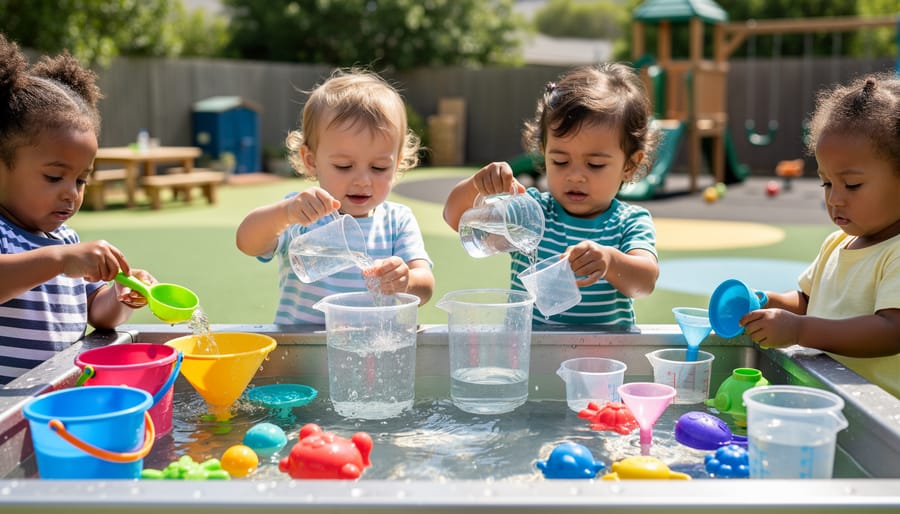
- Pouring, splashing, and poking to find out what happens next. Every “uh-oh, it fell!” is a tiny experiment.
- Technology
- Pressing a button and watching or hearing something respond. Tools that react to little fingers teach that actions make things happen.
- Engineering
- Building a tower and watching it wobble. Then building it again, a little wider this time.
- Math
- Sorting by color, matching shapes, and noticing which pile is bigger. Counting comes later, but comparing starts now.
Notice a few grown-up words hiding in there. When your toddler knocks the tower down and tries again, that’s cause and effect, the idea that one action leads to a result. Matching blocks by color is sorting, and lining them up in a repeating order is a pattern.
You don’t need to teach any of these words on purpose. Just say them out loud while you play, like “Look, you sorted the red ones!” Little ones soak up new vocabulary from the happy chatter around them.
Comparison Table: All 8 STEM Toys for 2 Year Olds Side by Side
Here are all the picks side by side, so you can spot the right fit in a few seconds. Skill areas show what each toy builds most, and the best-for labels match the ones used throughout this guide.
| Toy | Main STEM Skill | Listed Age | Customer Rating | Best For |
|---|---|---|---|---|
| Yoto Mini 4th Gen Portable Kids Audio Player | Technology | 3+ | 4.6 stars (55 ratings) | Screen-free listening |
| PicassoTiles 100 Piece Magnetic Tiles | Engineering | 3+ | 4.8 stars (40,785 ratings) | Overall building |
| UNGLINGA 150 Experiments Science Kits | Science | Check listing | 4.7 stars (1,113 ratings) | Growing into |
| Busy Board for Toddlers | Engineering | Check listing | 4.4 stars (1,833 ratings) | Pretend play and fine motor skills |
| Learning Resources Botley 2.0 The Coding Robot Activity Set | Technology | Check listing | 4.5 stars (1,907 ratings) | First taste of coding |
| Fat Brain Dimpl Pops | Math | 2+ | 4.9 stars (977 ratings) | Sensory play |
| Magnetic Blocks | Math | 3+ | 4.7 stars (290 ratings) | Stacking and sorting |
A few quick notes on reading this chart. Ratings come from public product listings, so a toy with thousands of reviews tells a steadier story than one with a few dozen. Fat Brain Dimpl Pops had limited stock when we did our research, and availability for any of these can change, so peek at the current listing before you plan a birthday gift around one.
Where a toy lists 3+, treat it as a play-together pick for your two-year-old. Sit beside them, keep an eye on small parts and magnets, and let them lead the fun.
1. Yoto Mini 4th Gen Portable Kids Audio Player, Best Screen-Free Listening Pick

A grown-up’s first thought about tech for a two-year-old is usually “more screens.” The Yoto Mini 4th Gen Portable Kids Audio Player flips that script. It’s a portable, screen-free audio player, so little ears get the fun and little eyes get a rest.
Here’s what stood out in our testing: this one builds listening skills in a way a tablet never could. Toddlers hear stories, songs, and sounds, then start repeating words, guessing what happens next, and making up their own tales. That’s early language and storytelling practice, wrapped inside a gadget they can press and carry. The listing says it offers up to 16 hours of battery life and is water resistant, which suits a toy that will get dropped, carried, and splashed. It holds a 4.6 rating from 55 customer ratings.
One honest note: the listing says age 3+. That means a mature or closely supervised 2-year-old is the best fit, so keep a grown-up nearby.
Pros
- Screen-free play keeps the focus on listening and imagination.
- Up to 16 hours of battery life covers long car rides and quiet afternoons.
- Water resistance helps it survive messy toddler moments.
- Stories and songs support early language and storytelling skills.
Cons
- The listing labels it age 3+, so a 2-year-old needs close supervision.
- It needs extra content cards to play stories and songs.
- Our best-for label is listening, so it won’t satisfy kids who want to build or tinker.
Try a game called Story Sound Hunt. Play a short story or song, then ask your little listener to point to or name every sound they heard, like an animal noise or a door creak. Then switch roles and let them make a sound for you to guess.
2. PicassoTiles 100 Piece Magnetic Tiles, Best Overall Building Toy

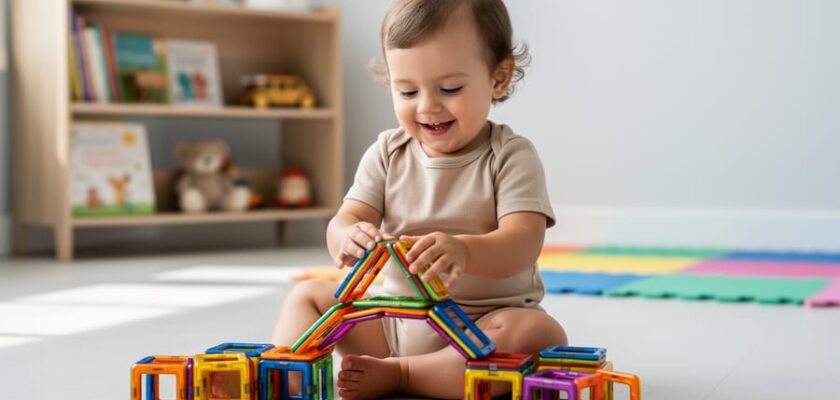
PicassoTiles 100 Piece Magnetic Tiles are our best overall pick, and the numbers back it up: 4.8 out of 5 from 40,785 customer ratings, the highest-rated toy in this roundup by a wide margin on review volume. These clear, colorful tiles snap together with magnets, so little hands can make flat designs, then flip them into 3D shapes. That’s engineering and early geometry hiding inside a game.
One honest note: the listing says kids 3+, so a 2-year-old needs a grown-up close by the whole time. We found they work best as a “play together” toy at this age. If shapes and angles get you curious, our geometry tools guide shows where this kind of play leads next.
Pros
- Open-ended building teaches engineering, shapes, and cause and effect.
- Clear tiles let light shine through, which makes color play extra fun.
- The 4.8 rating across 40,785 customer ratings shows families really like them.
- Easy to grow with, from flat patterns to towers and houses.
Cons
- Listed for ages 3+, so it’s not a hands-off toy for a 2-year-old.
- Magnets mean you should supervise closely during play.
- Toddlers may prefer knocking things down to building them up.
Start simple. Lay down a flat tile floor, then build a tiny house or a wobbly tower. Then play “build it, knock it down, rebuild.” Your toddler gets the crash, and you get a lesson in cause and effect without anyone noticing.
3. UNGLINGA 150 Experiments Science Kits, Best Pick to Grow Into

Here’s the honest truth about the UNGLINGA 150 Experiments Science Kit: your two-year-old won’t be running a chemistry lab on their own, and that’s okay. We think of this one as a grow-into pick. It’s a kit you buy now and keep growing alongside your little scientist.
At this age, a grown-up does the experiments while your toddler gets the front-row seat. Think of yourself as the lab assistant and your child as the official Chief Observer. The kit is built around chemistry-style activities, 150 experiments in all, so there’s plenty of variety to keep it fresh for years.
That’s where early science words come in. When something bubbles up, say “fizz!” When you stir two things together, say “mix!” When your toddler leans in close to watch, say “observe!” Those little words are the first building blocks of scientific thinking, and toddlers soak them up faster than you’d expect.
Parents seem to agree this one delivers. It holds a 4.7 out of 5 rating from 1,113 customer ratings, which is a strong showing for a kit with this much range.
Try a “Fizz Watch” together: have your child point at the bubbles and shout “fizz!” every time they spot one. It turns a short experiment into a game they’ll ask to play again.
4. Busy Board for Toddlers, Best Hands-On Pretend Play and Fine Motor Pick

Meet the busy board, a toddler-sized wall of latches, switches, and gadgets that begs to be poked, flipped, and slid. With a 4.4 rating from 1,833 ratings, it’s a hands-on pick for little fingers. Every click and twist builds fine motor control and early problem solving, because a toddler has to figure out which gadget does what. It also fits the popular STEM tool-bench style of pretend play that shoppers search for at this age, so your tiny builder can “fix” things just like the grown-ups do.
Pros
- Latches, switches, and sliders give fingers real fine motor practice.
- Each gadget is a small puzzle, so it nudges early problem solving.
- The pretend-fix-it style invites imaginative play.
- It’s easy to carry along for travel-friendly play.
Cons
- Some toddlers may master every gadget quickly and move on.
- Small parts mean it needs a close look and supervision.
- Listed age guidance varies, so it won’t suit every 2-year-old.
Try a game we call “Find the Click.” Ask your toddler to hunt for the gadget that makes a click, then the one that slides, then the one that flips. Games like this turn play into learning without feeling like a lesson at all.
Before you buy, check the age guidance on the listing and look over the parts, especially anything small or loose. Stay close during play, and enjoy the proud grin when that first latch finally pops open.
5. Learning Resources Botley 2.0 The Coding Robot Activity Set, Best First Taste of Coding

Botley 2.0 is a screen-free coding robot, and it’s our pick for a first taste of programming. It teaches sequencing, which means putting directions in the right order. That’s the heart of coding. Kids press buttons to tell Botley where to go, then watch the little robot follow every step. It earns a 4.5 out of 5 from 1,907 customer ratings.
Here’s the honest part. Botley is aimed at slightly older kids, so a 2-year-old will mostly watch and press buttons alongside a grown-up. We’d call it a long-lasting pick rather than a toy your toddler will master this month.
Pros
- It offers screen-free coding practice built around sequencing and directions.
- It keeps its value as your child grows into more advanced challenges.
- Pressing buttons and watching the robot move teaches cause and effect.
- It’s a fun way to connect play with early coding ideas.
Cons
- It’s a stretch for most 2-year-olds to use on their own.
- A grown-up needs to guide the play at this age.
- The real coding fun comes a bit later.
Try a game of “Robot Says” to make it playful. Say a simple direction, like “Botley, go forward!”, then let your little one press the button and cheer when the robot rolls. Add a second step once they’re ready. It’s pure sequencing practice, disguised as giggles.
This is the same spirit behind coding play here at BlackDog. If your family loves hands-on thinking games, our math learning ideas pair nicely with a robot that follows directions.
6. Fat Brain Dimpl Pops, Best Sensory Pick for Tiny Fingers

Meet the highest-rated toy in our whole roundup: Fat Brain Dimpl Pops, with a 4.9 out of 5 from 977 customer ratings. It’s a squishy, poppable sensory toy, and the listing says it’s suitable for ages 2 and up, so this one is a true age-2 fit, no grown-up fudging required.
Why does it count as STEM? Every pop is a tiny science experiment in cause and effect: press here, and something happens. Little fingers work hard to push each bubble, which builds the fine motor strength toddlers need for gripping crayons and, later, keyboards. Pops also come in neat rows, which makes counting feel like a game instead of a lesson.
Pros
- The listing is made for ages 2 and up, so it matches toddler hands from the start.
- Squishy popping gives satisfying sensory feedback and teaches cause and effect.
- Pushing each bubble builds fine motor strength.
- The rows of pops make early counting easy.
Cons
- Stock was limited when we looked (only 15 left), and that can change.
- A speedy toddler may finish the popping fast and move on.
- It’s more about tactile play than building or experimenting.
Try a game we call Pop and Count. Pick one row, then press each pop while you count out loud together: “One, two, three!” Flip the toy over and count the pops on the other side. Once your little learner has the rhythm, ask which side has more.
Because it’s one of the few picks labeled for age 2, it’s an easy first buy. Check the current listing before you plan around it, since availability can shift quickly.
7. Magnetic Blocks, Best Starter Set for Stacking and Sorting

Meet the Magnetic Blocks, a 200-piece building set that gives little builders plenty to work with. It earns its “best starter set” label because there are so many pieces to stack, match, and sort. It holds a 4.7 rating from 290 customer ratings, and it was in stock when we looked.
The listing is labeled for ages 3+, so a 2-year-old needs a grown-up close by. Magnets and tiny hands call for supervision, so keep play at the table or on the rug, where you can watch every click.
Here is how we saw it stacking up for toddlers:
Pros
- With 200 pieces, there is plenty to sort by color and build with.
- Magnets snap together, which makes simple towers and shapes feel like magic.
- It is great for early patterns and engineering through free play.
- It grows with your child as builds get taller and fancier.
Cons
- The listing is labeled 3+, so close supervision is a must at age 2.
- Magnets and small pieces mean a grown-up needs to stay nearby.
- Cleanup takes a minute with this many pieces.
Try a game we call Color Parade. Pour out the blocks and invite your toddler to line up all the reds, then the blues, in a long, wiggly parade. Count the pieces together, then build a tiny float for the parade to carry along. Sorting like this is early math, and snapping pieces into place is early engineering. For more ideas, explore these games and play activities you can adapt for younger kids.
Safe and Smart STEM Play for Two-Year-Olds: Quick Tips for Grown-Ups
Start with the age label. Many of our picks, like the magnetic tiles and the Yoto Mini, list 3+, so a 2-year-old needs a grown-up close by. Magnets and small parts are the big ones to watch: keep tiles, blocks, and loose pieces out of mouths, and check play areas after each session.
Next, rotate toys. Put a few away and swap them in every week or so, and old favorites feel brand new. Then sit down and play together. Narrate what happens (“The tower wobbled!”), ask “what if” questions, and let your little one lead. If they want to knock it all down, that’s cause and effect in action.
Here’s a try-this-today challenge: build the tallest tower you can, then predict how it’ll fall before you push it. Count the blocks together as you go. Once your toddler is ready for more, you can move on to STEM toys for 7 or even STEM toys for 8-10. Those years will be here before you know it!
Frequently Asked Questions About STEM Toys for 2-Year-Olds
Here are quick answers to the questions parents ask us most about STEM play at this age.
What counts as a STEM toy for a toddler?
Any toy that invites your little one to explore, build, sort, or figure out cause and effect counts. Stacking blocks, squishy poppers, and busy boards all work, because they quietly build skills in science, technology, engineering, and math.
Are magnetic tiles safe for a 2-year-old?
They can be, but only with close supervision. Both of our magnetic picks, the PicassoTiles set and the Magnetic Blocks, carry a 3+ listing label, so check the age guidance and keep an eye on small parts and magnets during play.
Do toddlers need coding toys?
Not at all! Coding toys like Botley 2.0 are a fun extra, but a two-year-old will mostly press buttons and watch with a grown-up. Think of it as a long-lasting pick they’ll grow into.
What if a toy is labeled 3+?
That label is the maker’s guidance, so take it seriously. If you choose a 3+ toy for a mature two-year-old, play together and keep small pieces out of reach.
A small handful of open-ended toys beats a giant pile. When you rotate a few favorites, your toddler gets to dig deeper into each one, and that’s where the real learning happens.
Here we are at the end of our toy box, and what a fun one it was! PicassoTiles 100 Piece Magnetic Tiles earned our top overall spot, and the lineup around it covers lots of ground: listening with the Yoto Mini 4th Gen Portable Kids Audio Player, fizzy science with UNGLINGA, tactile fun with Fat Brain Dimpl Pops, a first taste of coding with Botley 2.0, and more. Every pick had to pass the same checklist:
- Age fit and safety, with honest notes when a toy is labeled 3+.
- Open-ended play that lets kids invent their own games.
- A clear skill area in science, technology, engineering, or math.
- Durability and strong customer ratings.
- How much grown-up help a toy needs.
Here’s the secret, though: the toy is only the starting spark. Your two-year-old learns the most when you stack, pop, press, and giggle together. Knocking over a tower is a real experiment in cause and effect! Ready for more? Explore the coding adventures, math games, and STEM activities waiting for you across BlackDog, and keep those little scientists curious.
Final Verdict
The Yoto Mini 4th Gen Portable Kids Audio Player takes the top spot because it brings stories and sounds to little learners without a screen, building listening and early language skills. It’s labeled 3+, so it suits a mature or closely supervised 2-year-old best. Pick it for families who want a screen-free, tech-meets-toddler favorite that grows with their child.
