

Getting your hands on printable Sudoku PDFs takes about two minutes: pick a trusted source, download puzzles matched to your child’s skill level, adjust your printer settings to landscape or portrait, and print. These number-grid brain teasers work perfectly for road trips, rainy afternoons, quiet classroom time, or any moment you need screen-free engagement that builds logical thinking skills.
Parents and teachers love Sudoku PDFs because they’re instant, cost-free, and incredibly versatile. You can print a single puzzle for a quick challenge or batch-print an entire booklet for the week ahead. The beauty lies in the range: beginners start with 4×4 grids using simple number patterns, while more experienced young solvers graduate to classic 9×9 grids that require strategic thinking and patience. Each completed puzzle strengthens problem-solving abilities, number recognition, and concentration without feeling like traditional homework.
This guide walks you through everything you need: where to find quality puzzles, how to choose the right difficulty for ages five through twelve, printer settings that save ink and paper, and creative ways to turn Sudoku into a collaborative game or reward system. Whether you’re preparing materials for homeschool math enrichment or simply want a quiet activity that keeps young minds sharp, you’ll have a stack of ready-to-go puzzles printed and organized in minutes.
What You’ll Need to Get Started
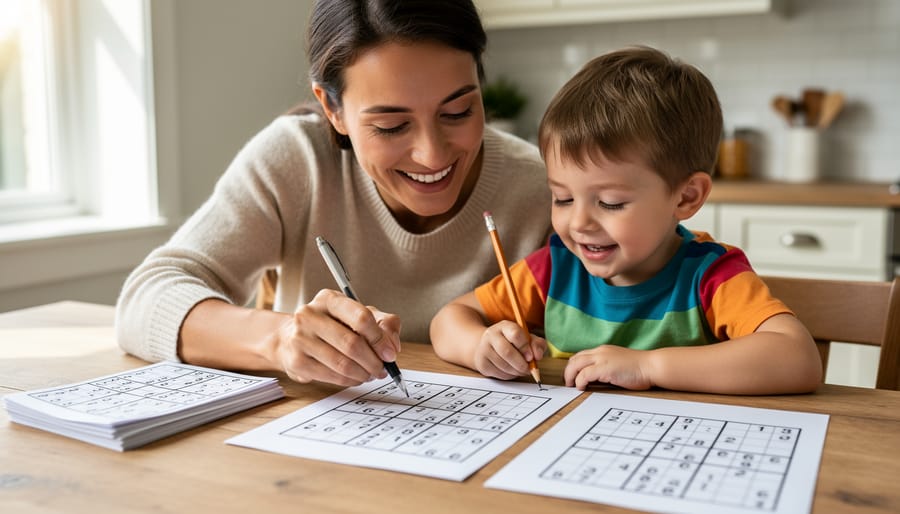
Getting ready to print Sudoku puzzles is wonderfully simple, you probably have everything you need already! Most families can start right away with just a few basic supplies and a little bit of excitement. Here’s what to gather before you dive into your first puzzle-printing adventure.
Required Materials:
- A device with internet access (computer, tablet, or smartphone) to find and download puzzles
- A printer (inkjet or laser work equally well) with sufficient ink or toner
- Regular printer paper (standard 8.5×11 inches or A4 size)
- Pencils with erasers for solving (mistakes are part of learning!)
Optional But Fun Extras:
- Colored paper to make puzzles more visually engaging and easier to organize by difficulty
- Colored pencils or markers for younger children who prefer drawing over writing numbers
- Laminating sheets or page protectors to create reusable puzzles with dry-erase markers
- A clipboard or binder to keep printed puzzles organized and portable
- Extra erasers (you’ll go through them faster than you think!)
Don’t feel like you need every optional item to start. A basic setup works perfectly for most families, and you can always add special touches later as your child’s interest grows. The beauty of printable Sudoku is its flexibility, whether you’re setting up a dedicated puzzle station or just grabbing a few sheets for a rainy afternoon, minimal supplies lead to maximum fun.
Before You Print: Tips for Choosing the Right Sudoku PDF
Not every Sudoku PDF is created equal, and choosing the wrong one can turn puzzle time into a frustrating meltdown instead of a fun learning moment. Before you hit print, take a minute to make sure the puzzle fits your child and your printer.
Start by checking where the PDF comes from. Stick with trusted educational websites, teacher resource sites, or established puzzle archives rather than random downloads from unfamiliar sources. Reputable sites are less likely to have file errors, hidden formatting issues, or overly cluttered designs that waste ink and confuse young solvers.
Next, match the puzzle size to your child’s skill level. A 4×4 grid works beautifully for kids just starting out, typically ages 5-7, because it teaches the logic without overwhelming them. Once they can solve 4×4 puzzles confidently, move up to 6×6 grids for ages 8-10. The classic 9×9 Sudoku is best saved for ages 10 and up or kids who have mastered smaller grids. Jumping straight to a 9×9 with a beginner almost guarantees tears.
Look at the design, too. Some PDFs cram multiple puzzles onto one page with tiny numbers, which strains young eyes and makes erasing mistakes nearly impossible. Others use overly fancy fonts or busy backgrounds that distract more than they help. Clean, simple grids with plenty of white space work best for kids.
Finally, open the file on your device and scroll through it before printing the whole set. Check that numbers are clear, lines are straight, and there are no weird formatting glitches that will waste paper and patience.
Step-by-Step: Printing Your Sudoku Puzzles
Finding Free Sudoku PDFs Online
Tracking down free Sudoku PDFs is easier than you might think. Start with educational websites that specialize in printable activities, many offer puzzles sorted by difficulty level, making it simple to find 4×4 grids for beginners or 9×9 challenges for advanced solvers. Teacher resource sites are another goldmine, often featuring curriculum-aligned puzzle sets designed specifically for classroom use.
Puzzle archives and dedicated Sudoku sites provide extensive collections, though you’ll want to preview files before printing to confirm they’re kid-friendly. Look for clean layouts with large, easy-to-read numbers and plenty of white space around each grid.
BlackDog is a trusted destination for printable educational content, offering logic puzzles for kids that complement Sudoku beautifully. When browsing any site, check that downloads are genuinely free and don’t require unnecessary sign-ups or subscriptions.
A quick tip: bookmark two or three reliable sources so you always have fresh puzzles on hand. Many sites update their collections regularly, giving your child new challenges without the hunt. The best sources let you download individual puzzles or entire packs, offering flexibility for one-time printing or building a home puzzle library.
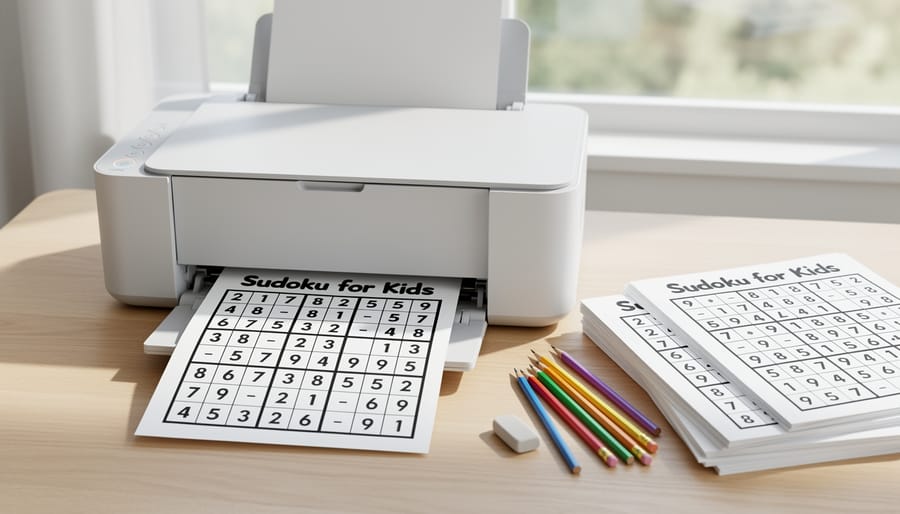
Printer Settings That Work Best
Most home printers handle Sudoku puzzles beautifully with a few smart adjustments. Choose black-and-white printing to save ink, the grid lines and numbers show up crisp and clear without color. Standard paper (20 lb copy paper) works perfectly fine for everyday puzzles.
Before printing your full batch, check the preview. Make sure margins aren’t cutting off any numbers or grid edges. If the puzzle looks tiny, adjust the scaling to 100% or “fit to page” in your printer settings, this prevents accidentally shrinking everything down.
For puzzles you’ll use repeatedly, bump up the print quality to “high” or “best” so the lines stay sharp when laminated. Portrait orientation typically works better than landscape since most Sudoku grids are square. Print one test page first to catch any issues before using up your paper stack.
How to Play Sudoku: A Quick Guide for Kids
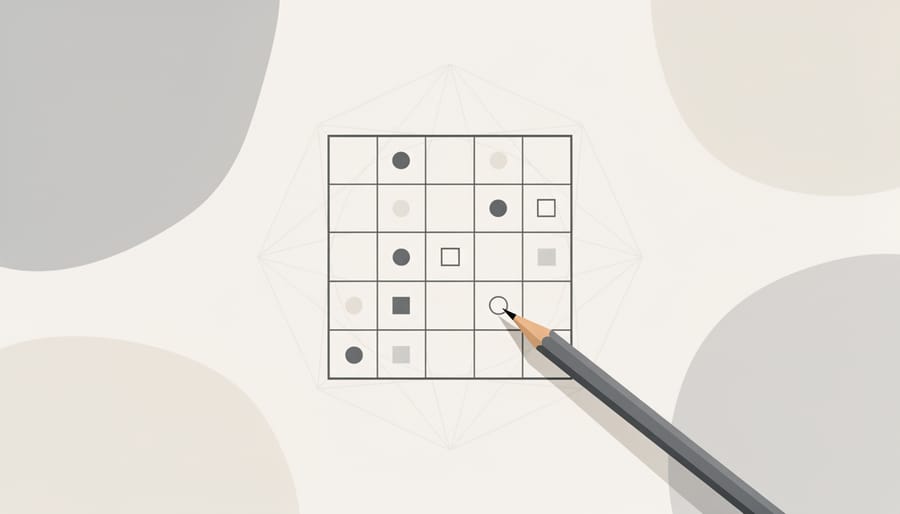
Sudoku might look like a number puzzle for grown-ups, but once you know the secret rules, it’s actually super simple! The goal is to fill in all the empty squares so that each row (going across), each column (going up and down), and each smaller box contains every number exactly once. In a 4×4 puzzle, you’ll use the numbers 1, 2, 3, and 4. In a 6×6 puzzle, you’ll use 1 through 6. And in the classic 9×9 puzzle, you’ll use all the numbers from 1 to 9.
The best way to start is by looking for squares where only one number can possibly fit. Scan a row, then check the column, then peek at the box, and see what’s missing. If you’re working on a 4×4 puzzle and you see 1, 2, and 4 already in a row, then the missing square must be 3. That’s detective work!
Don’t worry if you make mistakes, every Sudoku solver does, even the experts. That’s why pencils with erasers are your best friends. If something doesn’t work out, just erase and try again. Mistakes actually help your brain learn faster because they show you what doesn’t fit.
Start with 4×4 puzzles if you’re new to Sudoku, then move up to 6×6 when those feel easy. The 9×9 puzzles are waiting for you when you’re ready for a bigger challenge. Some printable PDFs even use pictures or colors instead of numbers for younger kids, which makes learning the rules even more fun. The important thing is to enjoy the puzzle-solving journey, one square at a time.
Making Sure Your Puzzles Work: Testing and Troubleshooting
Before you hand over a stack of puzzles to eager little hands, take a minute to make sure everything printed just right. Hold the first page up to good light and check that all the numbers are crisp and easy to read. If they look fuzzy or too tiny, your printer settings might need a tweak (usually bumping up the quality or checking the paper size option will fix it). Try printing one test page first, then adjust before you run the whole batch.
Here are quick fixes for the most common hiccups and signs it’s time to move up a level:
- Numbers too small or faint: increase print quality to “Best” or “High” in your printer settings, or try a slightly larger paper size
- Grid lines barely visible: switch from draft mode to normal or high-quality printing
- Pages cut off at edges: adjust margins to “narrow” or select “fit to page” before printing
- Your child finishes 4×4 puzzles in under three minutes without mistakes: they’re ready for 6×6 grids
- They ask for “harder ones” or seem bored with current difficulty: time to level up
- Completion happens calmly with few erasures: confidence is high, challenge can increase
Once you’ve confirmed the puzzles look great, think about how you’ll keep them organized. A simple folder or binder with labeled sections (Easy, Medium, Challenge) works wonders and lets kids pick their own adventure each day. You can also create a rotation by printing a week’s worth at a time and tucking tomorrow’s puzzle in a special envelope as a mini daily surprise. If your child breezes through puzzles consistently or starts asking what’s next, that’s your green light to introduce the next difficulty tier and keep the momentum going.
Creative Ways to Use Printed Sudoku Puzzles
Printed Sudoku puzzles don’t have to sit in a folder gathering dust. Turn them into reusable brain-boosters by laminating a stack and keeping a set of dry-erase markers nearby, kids can solve the same puzzle multiple times, testing whether they can beat their previous completion speed. Host friendly puzzle races where siblings or classmates compete side-by-side to finish first, then trade puzzles to try again. For younger learners still mastering numbers, swap digits for colorful stickers or small stamps (stars, hearts, animals) so they focus on pattern recognition without number anxiety.
If you’re exploring what is gameschooling Sudoku fits beautifully into daily math practice, use it as a warm-up before lessons, a brain break between subjects, or a Friday reward activity. The logical thinking required connects directly to early algebra concepts and strengthens problem-solving muscles. You can even branch into variants like killer sudoku once classic grids feel too easy.
Try these ideas to keep puzzles fresh and exciting:
- Create a puzzle challenge board where kids earn stickers for each completed difficulty level
- Use puzzles as calm-down tools during transitions or after active play
- Build themed sets for holidays or special interests (space numbers, animal symbols)
- Turn solving into a cooperative activity where family members tackle one grid together
- Pair puzzles with timers to encourage focused work sessions without pressure
Sudoku counts as one of many valuable types of educational games that develop critical thinking without feeling like traditional schoolwork. Rotate your printed collection regularly, mixing easier and harder puzzles so kids experience both quick wins and satisfying challenges. The more playful and varied you make the experience, the more likely Sudoku becomes a requested activity rather than an assigned task.
Common Questions About Printable Sudoku PDFs
Parents and educators often have similar questions when introducing printable Sudoku puzzles to children. Here are the answers to help you feel confident and ready to begin.
What age is appropriate for starting Sudoku?
Most children can start with simple 4×4 Sudoku puzzles around age 5 or 6, once they recognize numbers or can match pictures. Older kids (ages 8-12) typically enjoy standard 9×9 grids and more challenging variations.
How many puzzles should I print at once?
Start with 5-10 puzzles in one sitting. This gives kids variety without overwhelming them, and you can always print more once they finish. Printing in small batches also helps you adjust difficulty based on how your child progresses.
Can Sudoku really help with math skills?
Yes, Sudoku strengthens pattern recognition, logical thinking, and problem-solving, all essential for math success. While it does not teach arithmetic directly, it builds the mental flexibility and persistence that make math easier and more enjoyable.
Are there themed versions for holidays or special occasions?
Absolutely! You can find Sudoku puzzles with Halloween pumpkins, Christmas trees, or even dinosaurs and space themes. These themed versions make puzzles feel extra special and keep kids excited about solving them.
What should I do if my child gets frustrated?
Take a break and return to the puzzle later, or drop down to an easier difficulty level. Remind your child that mistakes are how we learn, and celebrate small wins like completing one row or box correctly.
How do I know when my child is ready for harder puzzles?
Watch for signs like finishing puzzles quickly without frustration, asking for more challenging options, or solving puzzles independently. If your child completes three puzzles in a row with confidence, it’s time to level up.
Remember, every child learns at their own pace. Some will race through puzzles, while others prefer to take their time. Both approaches are perfectly fine and show that their brains are working hard. The goal is to keep Sudoku fun, not to rush toward harder levels. If a question pops up that you cannot find here, trust your instincts as a parent or teacher, you know your child best, and you will figure out what works for your family.
You’re all set to bring Sudoku fun into your home! The whole process really is this easy: find a trustworthy PDF that matches your child’s skill level, adjust your printer settings, hit print, and let the puzzle-solving adventures begin. No special equipment needed, no complicated steps to follow, just grab some pencils and dive in.
Every puzzle your child completes strengthens their logical thinking, patience, and problem-solving abilities. These aren’t just games to pass the time; they’re brain-building exercises disguised as entertainment. When kids work through each grid, they’re practicing concentration, pattern recognition, and critical thinking skills that will help them in school and beyond.
Make Sudoku a special part of your weekly routine. Set aside puzzle time after homework, on lazy weekend mornings, or during quiet evenings. Celebrate each completed puzzle with high-fives and maybe keep a “victory wall” of finished grids. The more your child plays, the more confident and capable they’ll become.
Ready for more learning fun? BlackDog offers tons of educational printables and hands-on STEM activities designed to spark curiosity and make learning feel like play. Your family’s next favorite brain game is just a click away!

