

A crossword puzzle solver is a digital tool or app that helps you find answers to clues when you’re stuck, turning frustration into a learning moment. These clever helpers range from simple word-pattern matchers to comprehensive databases that cover major puzzles like The Globe and Mail’s daily crosswords (available Sunday through Friday, plus the supersized 21×21 Weekender every Saturday) and popular American puzzles. The Crossword Answers & Solver app, free on the App Store, provides instant solutions for The Globe and Mail, NYT, USA Today, Washington Post, and other leading publications, all from your phone or tablet.
For young puzzle fans and their families, the real magic happens when solvers become teaching tools rather than simple answer keys. Getting unstuck on one tricky clue opens the door to understanding wordplay patterns, building vocabulary, and developing the kind of logical thinking that powers science and math skills. When your child types in a pattern like “C_T” and discovers multiple possibilities, they’re actually exploring phonics, spelling rules, and context clues.
The best approach treats solvers as learning partners. Instead of immediately grabbing the answer, try narrowing down options together: count the letters, identify known letters from crossing words, and discuss what the clue might mean. This detective work strengthens problem-solving muscles and keeps the satisfaction of discovery alive. Modern puzzle platforms, including The Globe and Mail’s games accessible through their app’s Play button, make this collaborative solving easy and fun, whether you’re working on a phone, tablet, or computer.
What Is a Crossword Puzzle Solver?
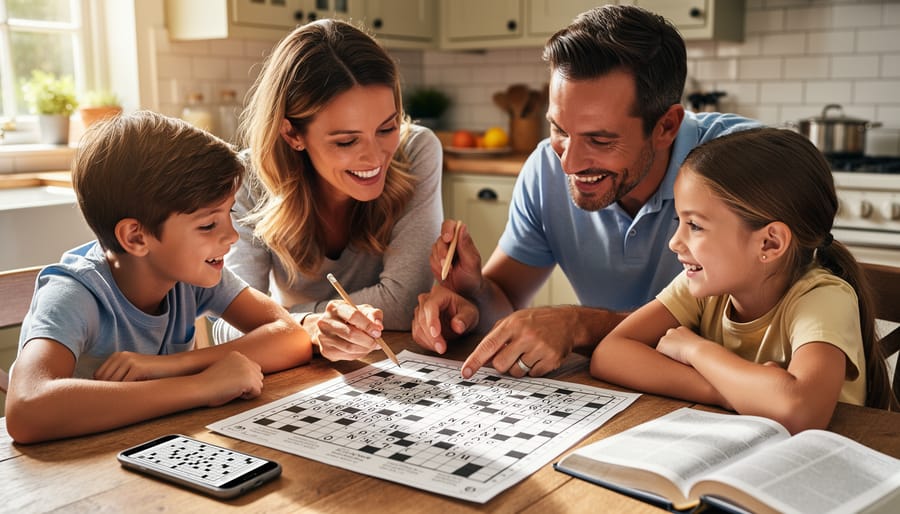
A crossword puzzle solver is a digital helper that finds words when you’re stuck on a tricky clue. Think of it like a super-smart dictionary that doesn’t just tell you what words mean, but actually searches through thousands of words to find ones that fit your puzzle perfectly.
Here’s how these clever tools work. When you type in a clue or show the tool which letters you already have (like “_ A _ _ Y” for a five-letter word with A in the second spot and Y at the end), the solver searches its huge database of words. It uses pattern matching, which is like a puzzle within a puzzle: the computer compares your letter pattern against every word it knows until it finds matches. Some solvers are so smart they can even understand tricky clues and suggest words based on what the clue means, not just the letter pattern.
The really cool thing? Crossword solvers aren’t cheating tools. They’re learning tools. When you discover that “_ A _ _ Y” could be “HAPPY,” “SASSY,” or “CANDY,” you’re not just filling in a blank. You’re learning new words, seeing spelling patterns, and understanding how clues work. Each time you use a solver thoughtfully, your brain builds connections between words, meanings, and patterns.
The key is using solvers as teachers, not as automatic answer machines. When you look up a tough clue, take a moment to understand why that word fits. What does it mean? How does it match the clue? This way, next time you see a similar clue, you might solve it yourself. That’s when crossword puzzles become truly fun: not because they’re easy, but because you’re getting better at them.
Popular Crossword Solver Tools Kids and Families Can Use

Crossword Answers & Solver App
The Crossword Answers & Solver app, available free on the App Store, works like having a puzzle expert in your pocket. When you’re stuck on a tricky clue, this app searches its database and provides instant answers for crosswords from major sources including The Globe & Mail, The New York Times, USA Today, and The Washington Post.
What makes this app especially handy for families is its speed and simplicity. Instead of typing entire clues, you can enter just the pattern you know (like “_ A T” for a three-letter word with A in the middle) and the app suggests possibilities. This quick-lookup approach means less frustration when you’re working on daily puzzles together at the breakfast table or during family puzzle time.
The app shines when different family members tackle the same puzzle throughout the day. Someone might fill in a few answers in the morning, then another person picks up where they left off using the solver for stuck spots. It keeps the puzzle moving forward rather than abandoned half-finished, which is particularly valuable when you’re building a regular crossword habit with kids who are still developing their vocabulary and pattern-recognition skills.
The Globe and Mail’s Daily Crosswords
The Globe and Mail’s Globe Games includes daily crosswords that offer families high-quality puzzles designed with care. From Sunday through Friday, you’ll find a new daily crossword waiting to test your word skills. On Saturdays, they publish The Weekender, a special treat featuring a supersized 21×21 grid created by talented Canadian crossword constructors. These puzzles are crafted specifically for Globe readers, which means they often include Canadian references and vocabulary your family might recognize from everyday life.
Accessing these crosswords is simple. You can solve them directly on The Globe and Mail’s website using a computer, or work through puzzles on your tablet where the larger screen makes it easier for kids to see the clues. If you’re on the go, pull them up on your phone. For the smoothest experience, download The Globe and Mail app and tap the Play button at the bottom of your screen to jump straight into the puzzle section. This flexibility means your family can tackle a crossword together at the breakfast table, during a car ride, or as a quiet evening activity when everyone needs a brain break.
Other Online Solver Resources
Beyond dedicated apps, several web-based crossword solvers offer simple, no-download help when you’re stuck. Websites like OneAcross and Crossword Solver let you type in the letters you already have (using underscores for blanks) and get a list of possible words. These work great for learning because you can see multiple options and choose the one that fits your clue best.
For younger puzzlers, look for solvers with clean layouts and few ads. Some sites also include definitions alongside answers, turning each lookup into a mini vocabulary lesson. Try a few different tools to find which interface feels easiest for your child to navigate independently. The goal is finding help quickly without frustration, then getting back to the puzzle itself.
How to Use a Crossword Solver as a Learning Tool
The ‘Try First, Then Look’ Method
The ‘Try First, Then Look’ method is simple: give every clue an honest try before reaching for a solver. Set a personal rule, maybe three good guesses, or two minutes of thinking, then check if you’re stuck. This builds patience and trains your brain to work through problems rather than immediately seeking answers.
When you do look up a word, don’t just copy it down. Read the answer, think about why it fits the clue, then cover it and try writing it from memory. This turns each solver lookup into a mini-lesson. Keep track of how many clues you solve on your own each puzzle, watching that number grow is its own reward and shows your vocabulary expanding in real time.
Building a Personal Crossword Vocabulary List
Turn every puzzling moment into a learning win by keeping a Crossword Vocabulary Notebook. When your child discovers a new word through a solver, have them write it down with its definition and use it in their own sentence. They can organize words by theme (animals, places, action words) or difficulty level, just like organizing word search puzzles by category. Make it interactive by decorating the notebook with drawings that illustrate tricky words or by incorporating new vocabulary into writing games during family time. Over weeks and months, this personal dictionary becomes a record of growth and a confidence-builder showing how many “impossible” words they’ve conquered.
Family Crossword Challenges
Turn crossword solving into a team sport by creating weekly family challenges where everyone contributes. Set up a “puzzle night” where you tackle a harder crossword together, assigning different family members to research clues in their areas of interest. Younger kids can handle easier clues while older siblings tackle trickier ones, with the solver as your collective backup when everyone’s stumped. Track which family member discovers the most new words each week, or see who can solve their assigned section fastest. For extra learning, combine crosswords with logic puzzles that use similar thinking skills. The key is celebrating both independent problem-solving and smart help-seeking, showing kids that knowing when to ask for assistance is itself a valuable skill.
The Educational Benefits of Crossword Puzzles
Crossword puzzles belong among the most powerful types of educational games because they combine multiple learning benefits in one engaging activity. When kids work on crosswords, they’re not just filling in boxes. They’re building vocabulary every time they encounter a new word, strengthening their spelling through repeated letter pattern practice, and developing logical reasoning skills as they use crossing clues to verify their answers.
The cognitive workout goes deeper than it appears. Crosswords teach children to think about words from different angles: their meanings, their structures, how they connect to other words. A child who learns that “feline” means cat through a crossword clue builds both vocabulary and the ability to infer meaning from context. The grid itself becomes a logic puzzle where each answer must fit both horizontally and vertically, teaching kids to check their work and catch mistakes.
Pattern recognition skills get sharper, too. Kids start noticing common word endings, frequent crossword answers, and how certain letter combinations work together. This builds reading fluency and helps with spelling tests far beyond puzzle time.
Here’s where crossword solvers prove their educational worth: they keep kids in the learning zone. When a puzzle becomes too frustrating, children often quit entirely, missing all these benefits. A solver lets them past one tough clue so they can keep building skills with the rest of the puzzle. It’s the difference between giving up after five minutes and spending twenty engaged minutes learning new words and solving problems.
The key is using solvers as supports, not replacements. Each solved clue becomes a teaching moment rather than a dead end.
Making Your Own Kid-Friendly Crosswords (With a Little Help)
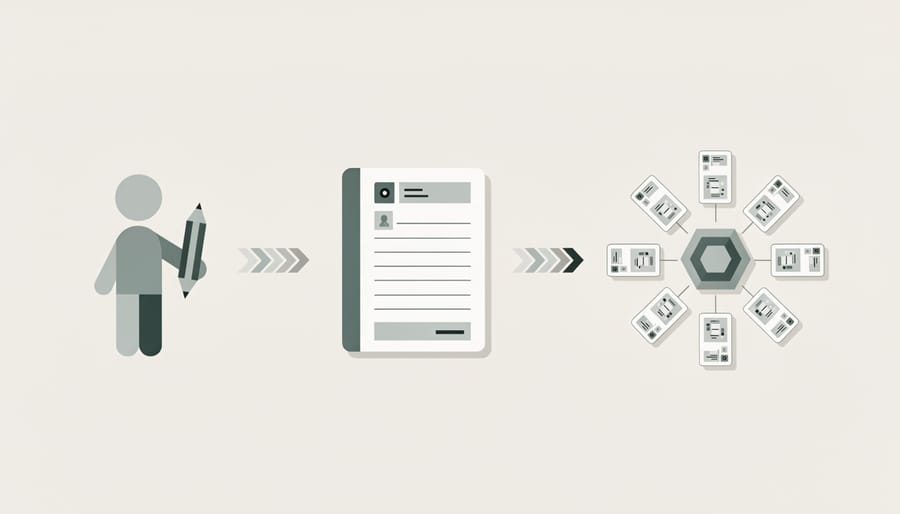
Creating your own crosswords turns you from puzzle solver into puzzle maker, and it’s easier than you might think! Start simple with a 5×5 or 7×7 grid on graph paper. Pick five or six words you’ve recently learned (maybe from using those solver tools), then see if you can arrange them so they intersect. The trick is finding letters that overlap: if “planet” crosses “star,” they might share the letter “a.” This is exactly how crossword construction algorithms work, they test thousands of possible word placements until they find combinations that fit the grid perfectly.
You don’t need fancy software to get started. Draw your grid, fill in your words, black out the empty squares, and number the white squares where words begin. Then write clues for each word, this is where you can get creative! Make them silly (“my dog’s favorite treat” instead of just “bone”) or connect them to things you’re learning in school. Once you’ve made a few by hand, you might explore free online crossword creators that handle the grid layout for you while you focus on choosing great words and writing clever clues. The best part? Challenge your family or classmates to solve your original creation, and watch them appreciate how tricky puzzle-making really is.
Crossword puzzle solvers aren’t about taking the easy way out. They’re tools that help you learn, grow your vocabulary, and tackle bigger challenges without giving up. When used thoughtfully, they transform frustrating moments into learning opportunities, keeping the joy in puzzling alive.
The key is balance. Try clues on your own first, celebrate the ones you solve independently, and use solvers when you’re genuinely stuck. Explore different puzzle sources together as a family. The Globe and Mail’s daily crosswords offer quality Canadian puzzles, while the Crossword Answers & Solver app provides quick help across multiple sources. Each puzzle you complete, whether with a little help or not, builds your skills and confidence.
Crosswords teach patience, pattern recognition, and the satisfaction of solving something tricky. They connect you with new words and ideas in ways that stick. So grab a pencil, open a puzzle, and don’t be afraid to use a solver when you need it. The goal isn’t perfection. It’s learning something new and having fun along the way. Ready to give it a try today?

