
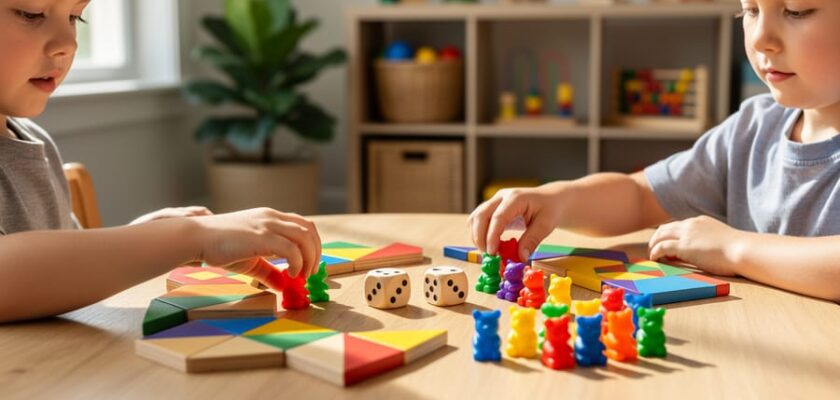
In early childhood, learning is most effective when it feels like play. Children are naturally curious, energetic, and eager to explore the world around them. When learning aligns with these instincts, especially through games, it becomes not only more enjoyable but also far more impactful. This is particularly true for mathematics—a subject many children struggle with when introduced in a rigid or abstract way.
Educational games provide a powerful alternative. They transform numbers, patterns, and logic into engaging experiences, helping children develop a strong mathematical foundation without pressure or fear.
Why Traditional Methods Often Fall Short
Traditional approaches to teaching maths often rely on memorization, repetition, and worksheets. While these methods can be useful in moderation, they may not fully engage young learners. Children can quickly lose interest or develop anxiety around maths when it feels like a chore rather than a discovery process.
In contrast, games introduce an element of fun and curiosity. They encourage children to experiment, make mistakes, and try again—without the fear of failure. This creates a positive learning environment where understanding grows naturally.
The Science Behind Game-Based Learning
Research in early childhood education shows that children learn best through active participation. Games stimulate multiple areas of the brain, including memory, problem-solving, and decision-making. When children roll dice, match patterns, or solve puzzles, they are practicing mathematical thinking in a hands-on way.
For example:
- Board games can improve counting and number recognition
- Puzzle games enhance spatial awareness and logic
- Card games introduce sequencing and probability
These activities help children connect abstract concepts to real-world experiences, making learning more meaningful.
Building Core Maths Skills Through Play
Educational games support the development of essential maths skills such as:
1. Number Sense
Games involving counting, grouping, and comparing numbers help children understand quantities and relationships between numbers.
2. Problem-Solving
Strategy-based games encourage children to think critically and plan ahead.
3. Pattern Recognition
Recognizing patterns is a foundational skill in mathematics, and many games naturally incorporate this concept.
4. Logical Thinking
Games that require rules and sequences help children develop structured thinking.
Boosting Confidence and Reducing Anxiety
One of the biggest benefits of game-based learning is its impact on confidence. When children succeed in a game, they feel a sense of achievement. Even when they lose, they learn resilience and problem-solving.
This positive reinforcement reduces maths anxiety—a common issue that can affect long-term academic performance. Children who associate maths with fun are more likely to stay engaged and motivated.
Incorporating Maths into Everyday Play
Parents don’t need expensive tools to introduce maths through games. Everyday activities can be turned into learning opportunities:
- Counting toys while cleaning up
- Measuring ingredients during cooking
- Playing simple board games at home
- Sorting objects by size, color, or shape
These activities make maths a natural part of daily life rather than a separate task.
The Role of Structured Learning Support
While games are highly effective, combining them with structured guidance can further strengthen a child’s foundation. Programs like primary maths tuition provide personalized instruction that builds on what children learn through play. This ensures that key concepts are reinforced and any gaps are addressed early.
A balanced approach—where play meets structured learning—offers the best outcomes for young learners.
Creating the Right Learning Environment
To maximize the benefits of educational games, parents and educators should focus on creating a supportive environment:
- Encourage exploration without pressure
- Celebrate effort, not just results
- Allow children to learn at their own pace
- Provide a variety of games and activities
When children feel supported, they are more willing to take risks and try new challenges.
Long-Term Benefits of Early Maths Foundations
A strong foundation in maths doesn’t just help in school—it supports critical thinking skills used throughout life. Children who develop these skills early are better equipped to handle complex problems, make decisions, and adapt to new situations.
Conclusion
Educational games are more than just entertainment—they are essential tools for early learning. By integrating play into maths education, parents can help children build strong foundations, boost confidence, and develop a lifelong love for learning. When combined with the right guidance and support, this approach sets children on a path toward academic success.

